
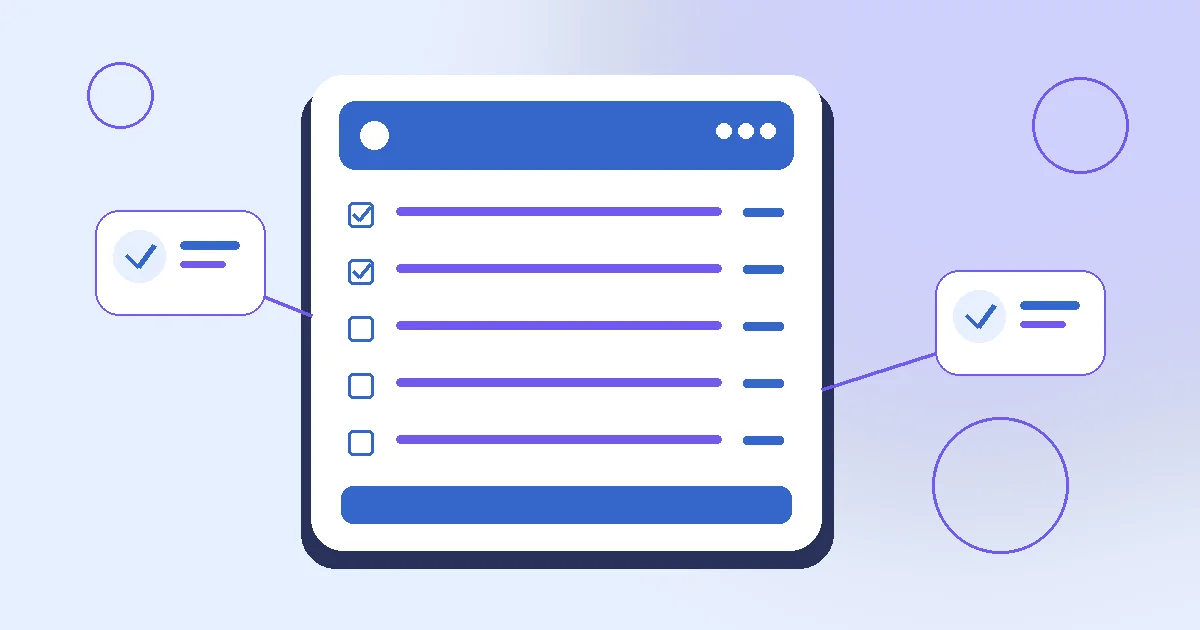
To keep checklist items small and testable, begin with the actual decision rather than the response counter. A testable checklist item states an action and an observable finish condition. Vague wording makes honest progress harder to report.
The situation is straightforward: a creator rewrites vague tasks into specific actions. The difficult part is deciding what a response can reasonably establish. This guide works through that decision, the checks to make before inviting people, and the handover after the response window. The central boundary is that a long task can hide several unfinished dependencies.
- A long task can hide several unfinished dependencies.
- Use one verb and one observable outcome per item.
- Review the list with someone who will actually use it.
What to establish before asking for responses
Split an item when it includes independent jobs or a dependency that might remain unfinished. One tick should not conceal several different outcomes.
Use this as the readiness test: use one verb and one observable outcome per item. Record the answer in terms a participant can understand. If the check is unfinished, say what is still unknown and who is finding out. An unanswered practical question should remain visible instead of being concealed by a polished invitation or an encouraging response count.
The boundary that changes this decision
Ask someone who will do the work what evidence would make them comfortable marking it complete. Their answer often exposes a missing instruction.
Keep the statement “a long task can hide several unfinished dependencies” beside the request, where it can influence the decision. Placing it only in a later explanation is too late for someone who has already acted on a different assumption. A useful review asks whether the wording still describes the real arrangement when read outside the original conversation.
Turn the result into a usable next step
Revise wording before people begin where possible. If the group discovers a problem later, explain the correction rather than quietly redefining what earlier ticks meant.
The follow-through here is to review the list with someone who will actually use it. Name the person who will do that and distinguish it from what the action itself records. If new information makes that step inappropriate, explain the change first. Participants should not have to infer a final commitment from a preferred option, a completion mark or a progress display.
- CheckUse one verb and one observable outcome per item.
- Keep visibleA long task can hide several unfinished dependencies.
- Follow throughReview the list with someone who will actually use it.
A decision record you can adapt
For the case where a creator rewrites vague tasks into specific actions, a short decision record keeps the facts separate from the response result. The entries below are a planning template, not a claim that any checks have already been completed. Replace unresolved entries with checked information before making the corresponding commitment.
| Record | What belongs here |
|---|---|
| Purpose | A creator rewrites vague tasks into specific actions. |
| Boundary | A long task can hide several unfinished dependencies. |
| Readiness check | Use one verb and one observable outcome per item. |
| Open point | The named person, source and date for any information still being checked. |
| Handover | Review the list with someone who will actually use it. |
Set up the action around the actual task
- Open Create and choose the shared checklist template. Enter small tasks with observable finish conditions; this is the information the response format can represent.
- Give the request a specific title, such as “Keep checklist items small and testable”. Explain that a creator rewrites vague tasks into specific actions, so a person opening the link has enough context.
- Write the boundary in ordinary language: a long task can hide several unfinished dependencies. Remove any option or instruction that depends on pretending this limit does not apply.
- Before sending the invitation, use one verb and one observable outcome per item. Share only the non-sensitive outcome of the check, rather than the private material used to establish it.
- Choose the audience and response deadline. Ask people to record completed tasks, and explain when the organizer will review the saved state.
- After reviewing the current result, review the list with someone who will actually use it. Close or archive the action when further responses would no longer inform that step.
Fields to review for this format
- Item wording: Begin with a concrete verb and a finish condition another collaborator can understand.
- Dependencies: Put prerequisite work before the task it enables and leave unresolved dependencies visible.
- Responsibility: Use workspace tasks for named assignments; a general checklist tick alone does not assign ownership.
- Correction: Allow an inaccurate completion mark to be corrected and discuss the unfinished work without blame.
- Handover: Check the actual deliverable and name the receiving person before treating the whole list as finished.
Work through an example before sharing
Consider an illustrative rehearsal in which a creator rewrites vague tasks into specific actions. Nothing in this example is a customer story or evidence that a real arrangement has been approved. First, draft the invitation. Then ask a reviewer to explain what they think participation would mean. Compare their interpretation with this boundary: a long task can hide several unfinished dependencies. A mismatch is a reason to revise the request before collecting responses.
Next, rehearse the practical check: use one verb and one observable outcome per item. Suppose that check is unresolved when the response window ends. The correct handover should identify what remains unknown, rather than announce that the whole arrangement is settled. If the check is satisfactory, the organizer can proceed to review the list with someone who will actually use it. In either branch, the response result and the external confirmation remain separate pieces of information.
A row combines several unrelated jobs
Contact venue, buy supplies and send invitations appears as one item, so a tick has no clear meaning. Split the row into outcomes with dependencies and accepted owners.
The evidence and handover for this exception
| Decision point | Case-specific review |
|---|---|
| Verify | Identify which part another person can inspect and what must happen first. |
| Communicate | Use short testable items rather than inflating the list with trivial clicks. |
For this exception, return to the original purpose: a creator rewrites vague tasks into specific actions. Compare the changed information with what participants actually saw when answering. The appropriate response is determined by the practical difference, not by a desire to preserve a neat response total. In particular, a long task can hide several unfinished dependencies. If that boundary is still unresolved, state the remaining question before asking anyone to act on the result.
Use the controls that fit this particular request
In the case where a creator rewrites vague tasks into specific actions, the platform should preserve the meaning of the request while making its next step easier to carry out. Review these linked product controls before you review the list with someone who will actually use it. Each link explains the current interface and the limits that apply; it does not establish that an outside organization has approved this example.
- Write an observable finish condition and allow inaccurate marks to be corrected.
- Use named workspace responsibilities when assignment matters.
- Review a starting pattern before creating a fresh action for another period.
Choose the audience with care
The fact that a creator rewrites vague tasks into specific actions does not mean every detail belongs in public discovery. A public action can be found by other visitors. An unlisted action stays out of Explore, but recipients can forward its URL. A private workspace action requires membership; use that control when a team needs restricted access, and still collect only information the task needs.
Questions that determine whether to proceed
What is the first useful check?
The immediate check is to use one verb and one observable outcome per item. Look for a current answer from the relevant person or source, not a guess inferred from the saved responses. If the answer is missing, describe the uncertainty and pause only the commitment that depends on it. People can still discuss the proposal while understanding that it is provisional.
What would make the response misleading?
The result becomes misleading if it obscures the fact that a long task can hide several unfinished dependencies. A response should be described in the terms the participant saw when submitting it. Do not silently reinterpret an earlier choice as consent to a different purpose, amount, time or arrangement. Material changes need an explanation and, where relevant, a fresh decision.
How should a changed response be handled?
Review the latest saved state before you review the list with someone who will actually use it. While an action remains open, participants can update their response using the same identity. A change is useful information rather than evidence of bad intent. If the group has already taken an external step, discuss what can actually be revisited instead of implying that a response edit reverses it.
What should the organizer say at the end?
A useful closing message states what was recorded, what remains unresolved and who owns the next step. Here the practical handover is to review the list with someone who will actually use it. Avoid claiming unanimous agreement when some people did not respond, and avoid describing a completed screen as proof that an event, purchase, payment or other outside activity has happened.
When is a different process more appropriate?
Use another process if the situation requires controls beyond this shared checklist: verified identity, legally binding approval, confidential records, regulated assessment or real financial handling, for example. Start with the actual boundary that a long task can hide several unfinished dependencies. The action can organize an ordinary conversation, but a clearer label cannot supply infrastructure or authority it does not have.
An invitation draft for this exact situation
The following is an illustrative starting draft for “Keep checklist items small and testable”, not an announcement that the practical checks are complete. Adapt it to the actual audience, response window and verified arrangement before sharing. In particular, remove any statement you cannot honestly make and keep sensitive details in an appropriate private channel.
We are coordinating a situation in which a creator rewrites vague tasks into specific actions. This action records self-reported completion of the listed tasks. Please read the context and record completed tasks using the choices or fields shown on the page. One boundary matters throughout: a long task can hide several unfinished dependencies. Before the group acts on the result, the responsible organizer will use one verb and one observable outcome per item. After reviewing current saved responses, the next step is to review the list with someone who will actually use it. If a practical constraint is missing, raise it through the appropriate route before anyone assumes the arrangement is final. Do not post passwords, payment details or unnecessary personal information. Please mark a row only when its stated finish condition is satisfied, and correct an inaccurate mark when necessary. A tick does not automatically assign another person a responsibility or verify an outside deliverable. Named assignments and dependencies should be checked explicitly. The handover should identify the receiving person rather than relying on a complete-looking progress count.
Read the draft from the recipient’s perspective: can they tell what they are answering, what remains tentative and who owns the follow-through? Compare it with the exception “a row combines several unrelated jobs” discussed above. If that exception would make the invitation misleading, revise the request before collecting another response. A reusable pattern is useful only when its statements still fit the current situation; copying polished wording does not complete the underlying check.
References for checking the wider principles
The practical check in this guide is to use one verb and one observable outcome per item. The references below provide wider guidance on the communication, access, privacy or consumer principles behind that review. They do not verify the hypothetical arrangement or endorse Onact. Read the current source and any organizational or local rules before relying on a specific claim.
Continue with the related decisions
- Build a moving checklist people can use
- Coordinate a neighbourhood swap table
- Build a study project submission checklist
- Handle a task marked complete too early
- Separate ownership from completion
- Handle ties on a friendly leaderboard
Put the checked plan into one clear request.
Use the shared checklist format when its response model fits this situation. Before sharing, use one verb and one observable outcome per item; after reviewing the saved result, review the list with someone who will actually use it.


